


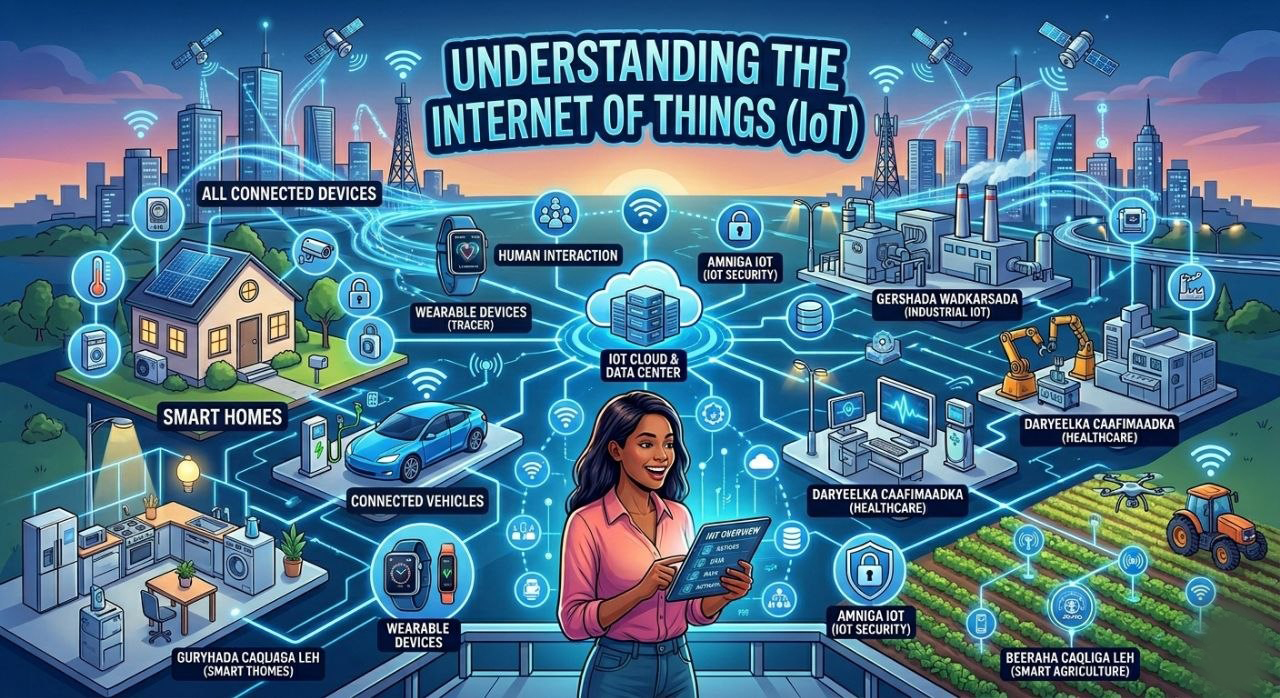
The world is becoming more connected every day. Beyond our smartphones and laptops, everyday objects are now joining the digital network. Understanding the Internet of Things (IoT) is essential for anyone looking to stay ahead in the modern tech and business landscape.
What is the Internet of Things (IoT)?
At its core, the Internet of Things (IoT) refers to a network of physical objects—”things”—that are embedded with sensors, software, and other technologies. These devices connect and exchange data with other devices and systems over the internet. These can range from ordinary household objects like light bulbs to sophisticated industrial tools.
How IoT Works
To gain a clear Understanding the Internet of Things (IoT), it helps to look at the four main components that make the system work:
- Sensors/Devices: These collect data from their environment (e.g., a thermostat sensing room temperature or a GPS tracking a shipment).
- Connectivity: The collected data is sent to the cloud via Wi-Fi, Bluetooth, cellular networks, or satellite.
- Data Processing: Once the data reaches the cloud, software processes it. This could be as simple as checking if a temperature reading is within an acceptable range.
- User Interface: The information is made useful to the user, often via an alert on a phone or a dashboard on a computer.
Practical Applications in 2026
Understanding the Internet of Things (IoT) is best achieved by looking at how it is used in the real world today:
- Smart Homes: Devices like smart locks, cameras, and voice assistants work together to improve security and energy efficiency.
- Healthcare: Wearable devices monitor heart rates and oxygen levels in real-time, sending data directly to doctors.
- Agriculture: Sensors in the soil can tell farmers exactly when their crops need water, reducing waste and increasing yield.
- Manufacturing: “Industrial IoT” uses sensors to predict when a machine is about to break down, allowing for maintenance before a failure occurs.
Why IoT Matters for Business
For businesses, the primary value of Understanding the Internet of Things (IoT) lies in data and automation. IoT provides a constant stream of real-time data that helps companies make better decisions, reduce operational costs, and create better experiences for their customers.
Whether it is tracking inventory in a warehouse or optimizing the energy use of an office building, IoT is the bridge between the physical and digital worlds, making operations smarter and more efficient