


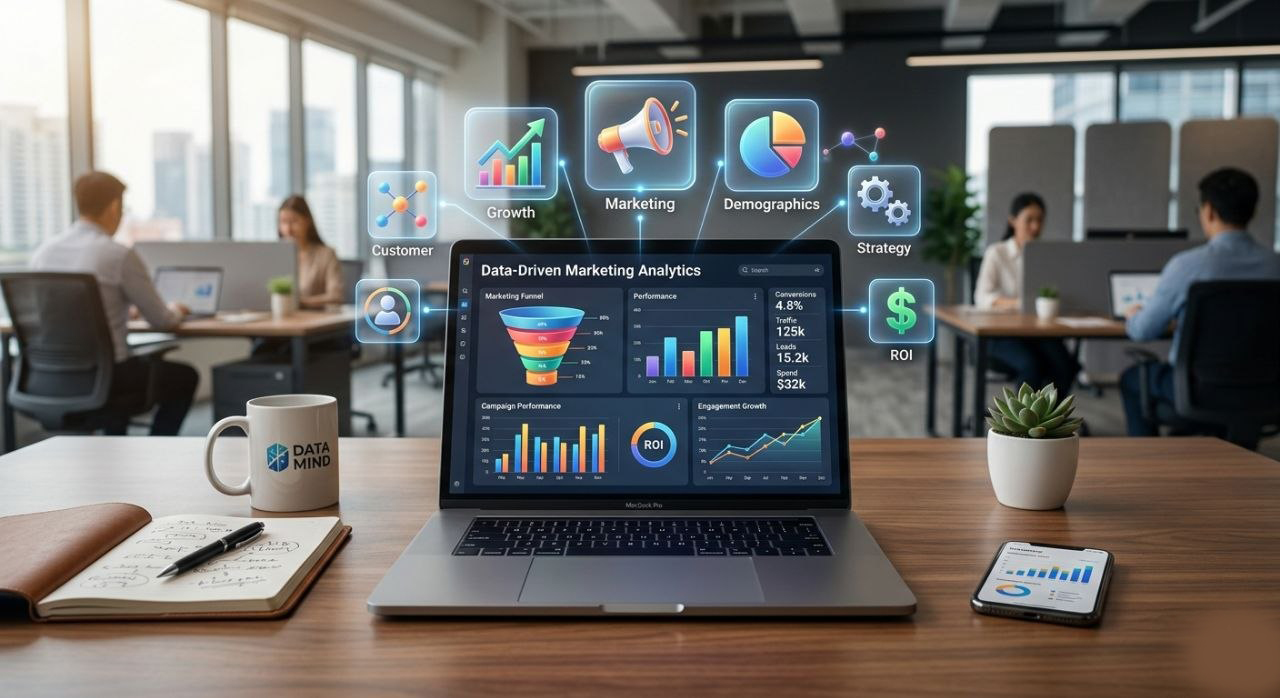
in the fast-paced digital economy of 2026, guessing is no longer a viable strategy. To stay ahead of the competition, businesses must pivot from “gut feeling” to a systematic approach. Data-Driven Marketing: How to Use Analytics is the definitive framework for turning raw numbers into high-converting campaigns and sustainable growth.
What is Data-Driven Marketing in 2026?
Data-driven marketing involves using information gathered from customer interactions and third-party sources to gain deep insights into consumer behavior. With the phase-out of third-party cookies, the focus has shifted toward First-party Data—the information you collect directly from your audience via your website, social media, and email lists.
How to Use Analytics for Maximum Impact
To master Data-Driven Marketing: How to Use Analytics, you need to focus on four key areas that drive Conversion Rate Optimization (CRO) and revenue growth:
1. Leverage Google Analytics 4 (GA4) and CDPs
Google Analytics 4 (GA4) remains the industry standard for tracking user behavior. However, top-tier brands in 2026 are also utilizing a Customer Data Platform (CDP) to unify data from all touchpoints. This provides a 360-degree view of the customer, allowing for hyper-personalized Marketing Automation.
2. Focus on Customer Lifetime Value (CLV)
Stop focusing only on the first sale. Use analytics to calculate Customer Lifetime Value (CLV). By identifying your most profitable customers, you can allocate your Marketing Budget more effectively, spending more to acquire high-value leads that provide long-term Return on Investment (ROI).
3. Implement Predictive Analytics
Modern marketing isn’t just about looking at the past; it’s about forecasting the future. Predictive Analytics uses AI to identify patterns and predict which products a customer is likely to buy next. This allows you to send the right message at the exact moment a customer is ready to purchase.
4. Optimize Your Return on Ad Spend (ROAS)
In a crowded market, every dollar counts. By using Cross-channel Analytics, you can see exactly which platforms (Facebook, Google, TikTok) are driving results. This enables Data-driven Attribution, helping you shift budget in real-time to the channels with the highest Return on Ad
Strategy Key Benefit High-Value Keyword
A/B Testing Improves User Experience Conversion Optimization
Segmentation Increases Engagement Targeted Marketing
Real-time Reporting Faster Decision Making Marketing Dashboards
Predictive Modeling Forecasts Trends AI-Driven Insights
Best Practices for Success
Trust the Data, Not the Hype: Always base your decisions on statistically significant sample sizes before scaling a campaign.
Prioritize Data Privacy: In 2026, transparency is a competitive advantage. Ensure your data collection methods are ethical and compliant with global regulations.
Continuous Testing: Use A/B Testing on your headlines, images, and call-to-actions (CTAs) to constantly refine your Digital Marketing Strategy.
Conclusion
Mastering Data-Driven Marketing: How to Use Analytics is about more than just reading charts—it’s about understanding human intent. By integrating Predictive Analytics and focusing on First-party Data, you can create a marketing machine that is efficient, scalable, and highly profitable.
Pro Tip: Use Marketing Automation to trigger personalized emails based on user behavior data. This simple step can increase your conversion rates by up to 20%!